
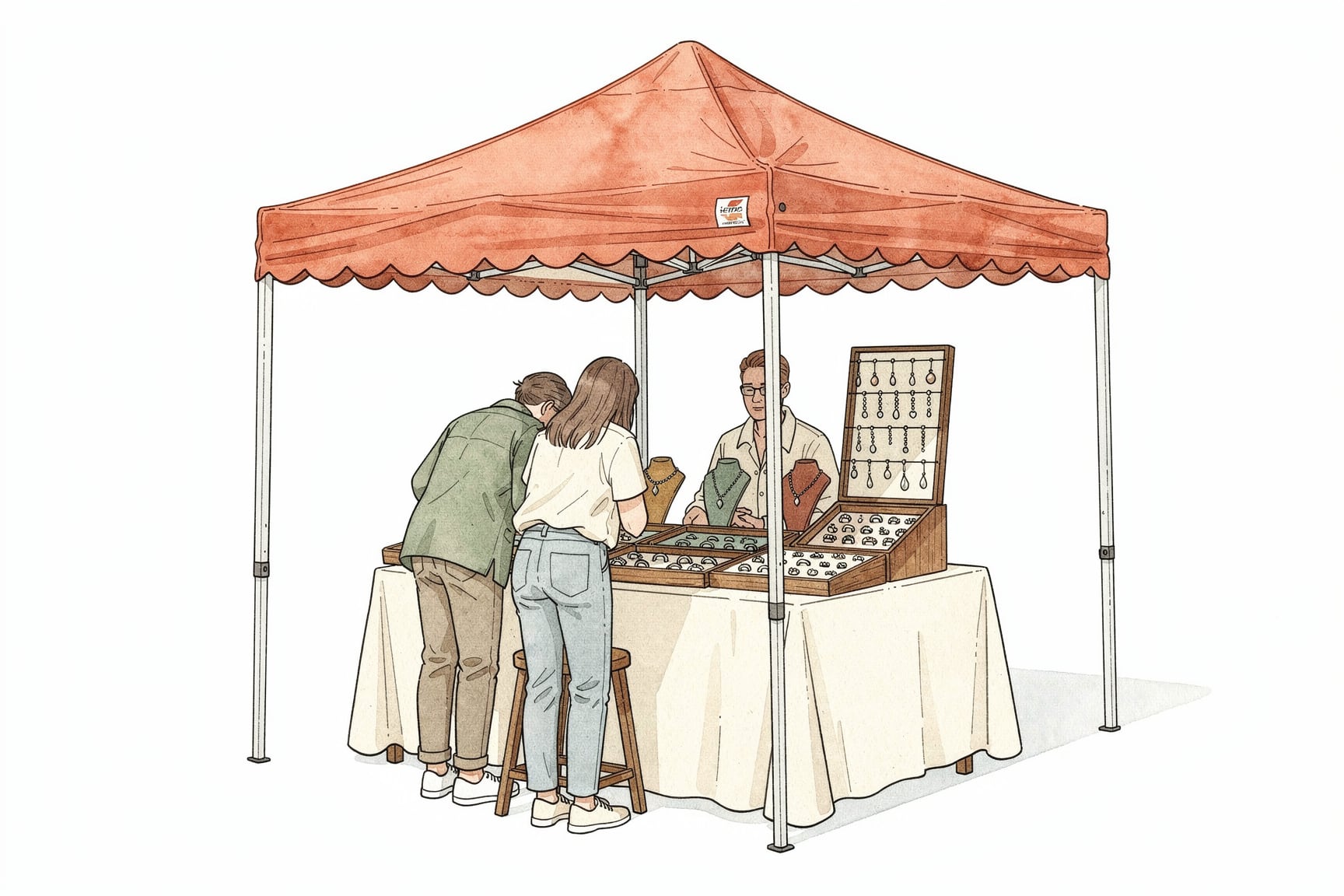
Find Antique Shows Accepting Vendors
Antique shows are the top of the resale pyramid.
The 100-year rule still applies at most shows. Dealers are expected to have provenance for higher-value pieces. Insurance is often required, and some shows verify credentials before accepting new applicants. The upside: attendees arrive with checkbooks and a knowledgeable eye.
Canopy Season helps you find antique shows that fit the level of your inventory.
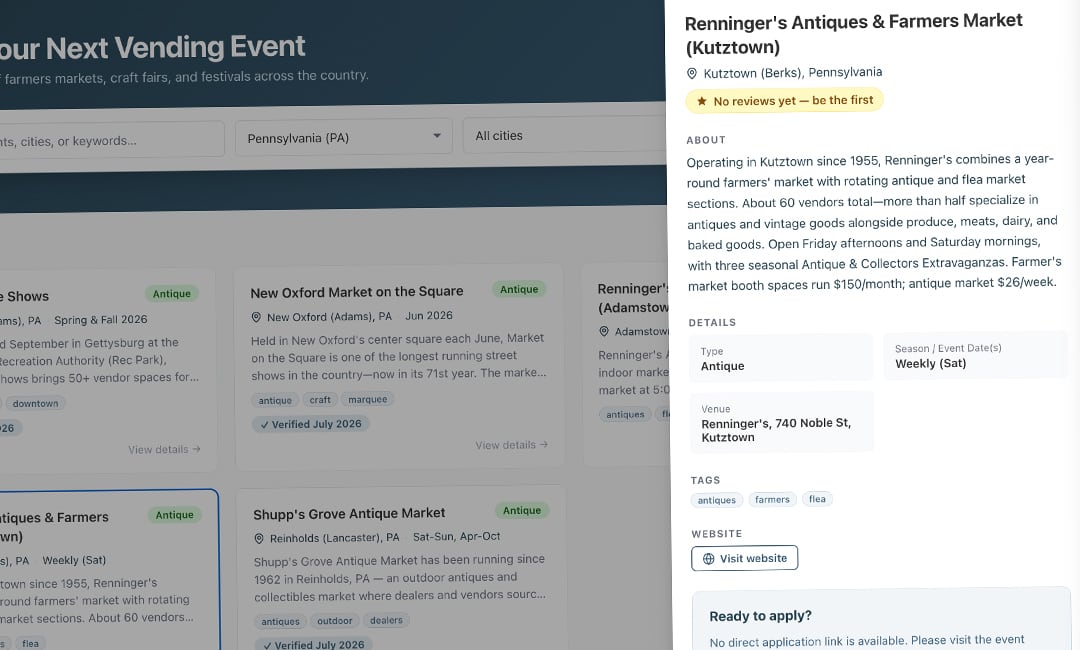
How to Find Antique Shows
Antique shows tend to be more selective than vintage markets and often require established dealer status. Some are producer-run and closed to newcomers; others actively recruit.
Canopy Season lists shows alongside application requirements so you can identify the ones open to new dealers.
What Vendors Should Consider Before Applying
The goal is not finding more events. The goal is finding events worth your time, effort, and budget.
Antique shows are a longer sales cycle than most vendor events. The right shows are worth the extra prep.
Why Vendors Use Canopy Season
Canopy Season lists antique shows alongside dealer requirements and vendor details so you can focus on the shows that fit your inventory.
Questions & Answers
How do I find antique shows accepting dealers?
Canopy Season lists antique shows alongside dealer requirements. Filter by state, category, or date range. Established shows often have waitlists — apply early or ask about openings directly.
What is the age threshold for antique dealers?
100 years is the traditional threshold. Some shows are stricter (pre-1900 only); some are looser and accept high-quality mid-century pieces. The show's marketing usually signals its position on this.
Do antique shows require dealer insurance?
Larger and higher-end shows often require proof of insurance covering your inventory during the event. Smaller regional shows may not. Higher booth fees generally come with insurance requirements attached.
Are new dealers accepted at antique shows?
Depends on the show. Some producer-run shows are closed to newcomers or heavily favor returning dealers. Others actively recruit. Most new dealers start with regional shows to build reputation before applying to national events.
What are typical antique show booth fees?
Regional antique shows run $200–$600. National and destination shows can charge $1,000–$3,000+ for a booth. Fees reflect the buyer profile and expected sales volume more than they reflect square footage.
Why use Canopy Season instead of other event directories?
Unlike many event listing websites that rely on outdated submissions or automated data collection, Canopy Season focuses on human-verified event information. The goal is simple: save vendors time, reduce surprises, and help them confidently choose events worth their investment. With searchable listings, verified details, application information, and vendor-focused tools, Canopy Season is designed specifically for people who make their living selling at events.