
Find Fairs Accepting Vendors
Fairs are a commitment.
County and state fairs run five to ten days. Some run longer. That's a different scale than a weekend market — it means staffing rotations, inventory planning for a multi-day run, and sometimes staying on-site or nearby. Booth fees are higher. So is expected attendance.
Canopy Season helps vendors find fairs that fit the operational load a multi-day run demands.
How to Find Fairs
State and county fair vendor applications open months in advance. Some fairs give returning vendors priority; others open new spots each year.
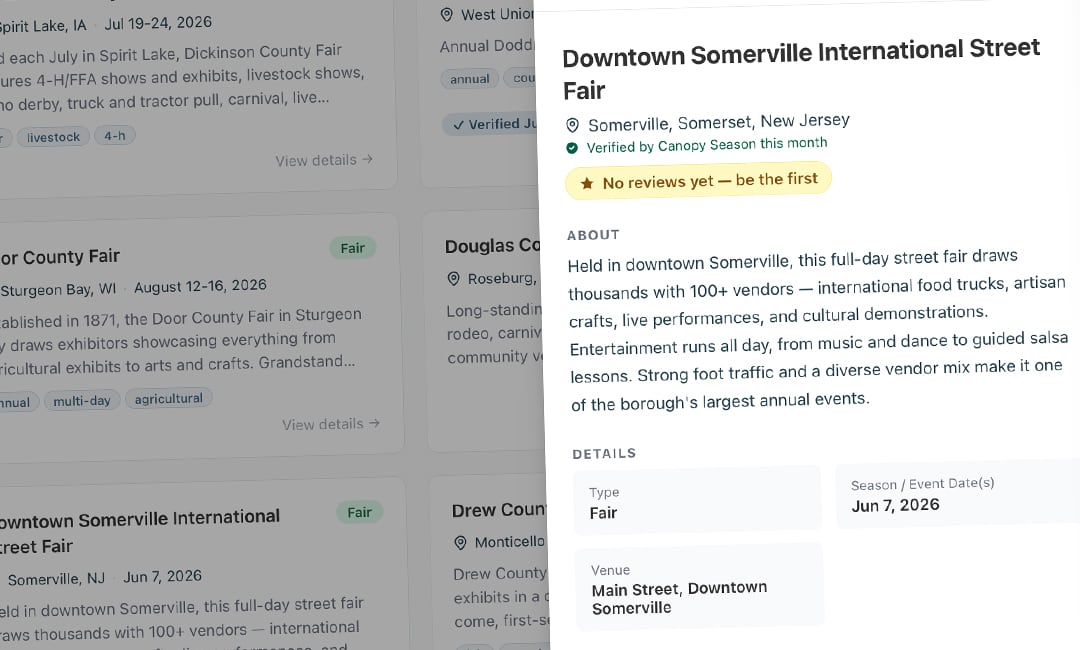
Canopy Season lists fairs alongside their run dates, booth fees, and application timelines so you can plan the labor and inventory a multi-day event requires.
What Vendors Should Consider Before Applying
The goal is not finding more events. The goal is finding events worth your time, effort, and budget.
Fairs are operationally different from any single-weekend event. Plan accordingly.
Why Vendors Use Canopy Season
Canopy Season lists county and state fairs alongside the multi-day operational details that matter for planning staffing, inventory, and logistics.
Questions & Answers
How do I find county and state fair vendor opportunities?
Canopy Season lists county and state fairs alongside their run dates and application windows. Fair applications open 4–12 months before the event. Larger state fairs open the earliest.
How long does a typical fair run?
County fairs run 4–7 days. State fairs run 10–17 days. Some large state fairs run three full weeks. Length affects staffing, inventory, and lodging planning.
Do fairs give returning vendors priority?
Most do. Returning vendors in good standing often get first right of refusal on their booth. New vendors usually take the leftover spots or land on a waitlist.
What are typical fair booth fees?
Most fair booth fees fall between $100 and $375, with a median around $300. Smaller county fairs can start under $50; larger state and destination fairs can push $1,000–$1,800+. Fees reflect multi-day attendance, not day-of foot traffic — so a $500 booth at a 10-day fair is often better math than a $200 weekend booth.
How do vendors handle staffing for multi-day fairs?
Most vendors work in shifts — either splitting the run with a business partner or hiring temporary staff. Some close early on weekdays and stay open late on weekends. On-site RV camping is common at rural fairs.
Why use Canopy Season instead of other event directories?
Unlike many event listing websites that rely on outdated submissions or automated data collection, Canopy Season focuses on human-verified event information. The goal is simple: save vendors time, reduce surprises, and help them confidently choose events worth their investment. With searchable listings, verified details, application information, and vendor-focused tools, Canopy Season is designed specifically for people who make their living selling at events.