
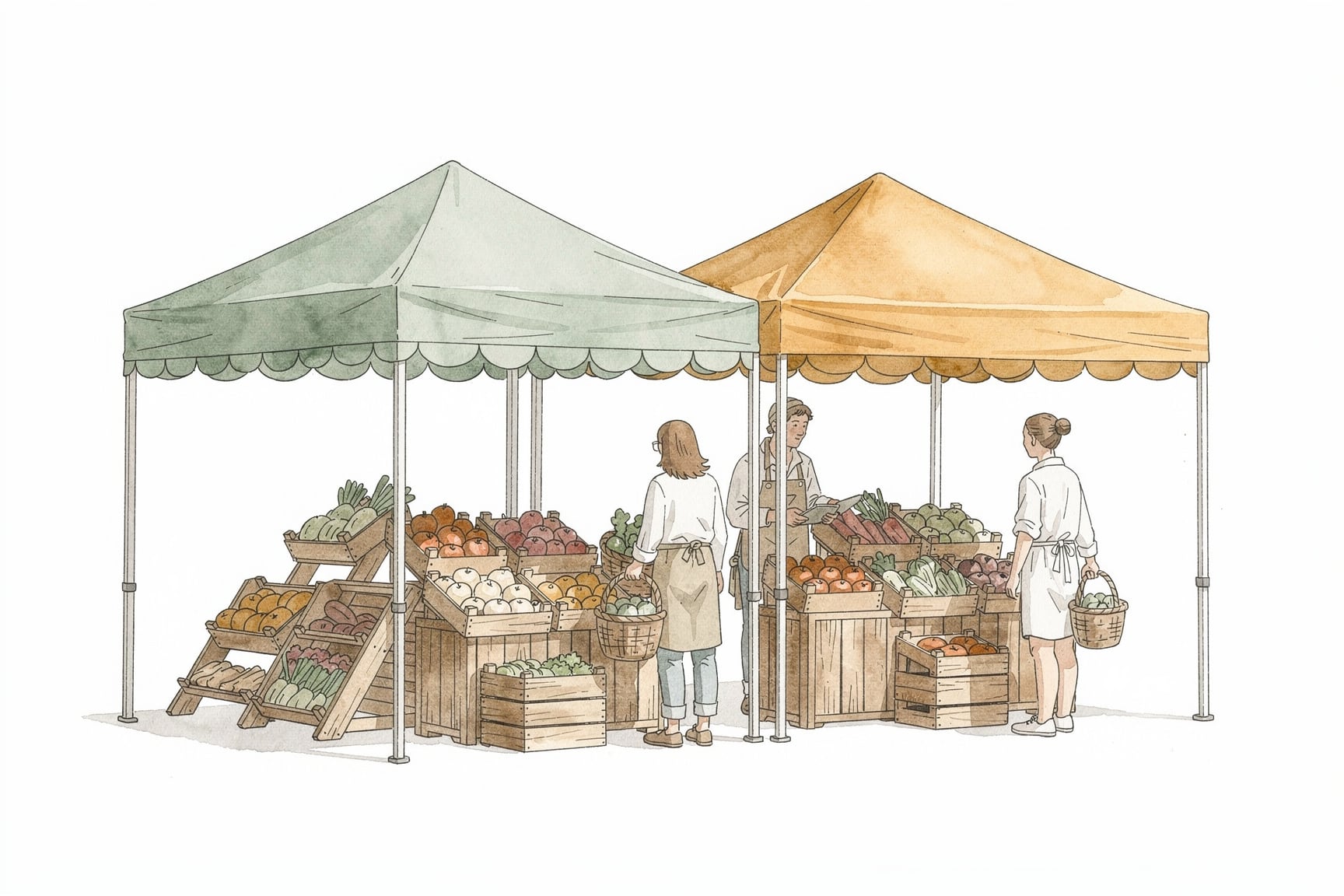
Farmers markets are a different animal
They're seasonal. They're weekly. They usually have producer-only rules, cottage food laws to navigate, and long-standing vendors who've held their spot for a decade. Getting in isn't a matter of a single application — it's a commitment to show up every Saturday from May through October, rain or shine.
Canopy Season helps you find markets that align with what you make and where you're willing to drive every week.
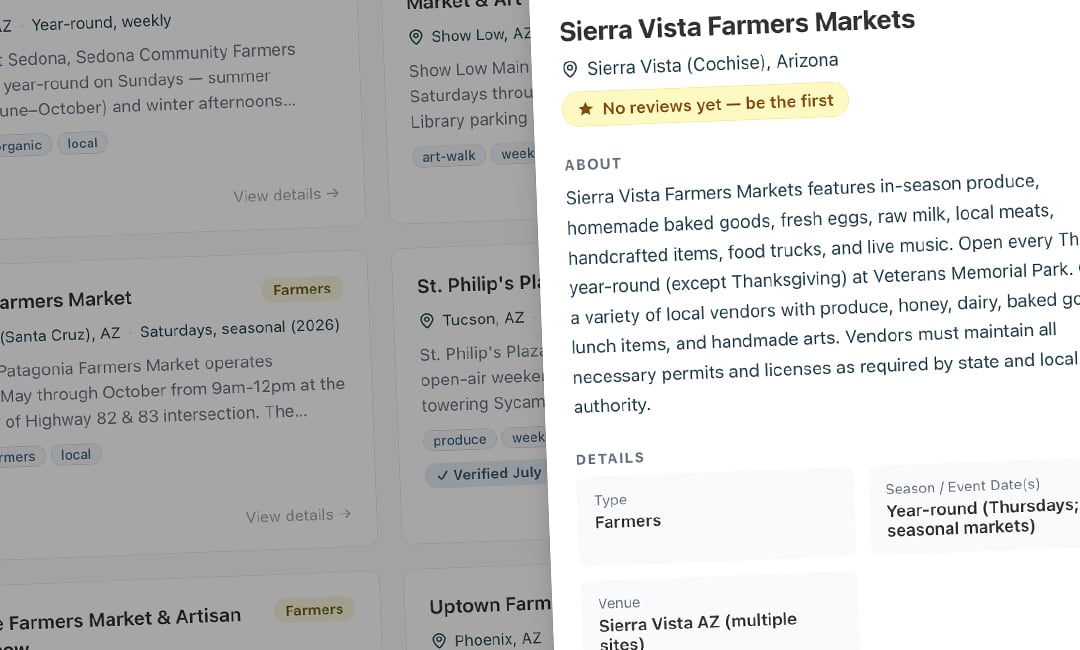
How to Find Craft Markets
How to Find Farmers Markets Accepting New Vendors
Farmers markets often have waitlists, producer-only requirements, and application windows that open once a year. Some accept crafters and prepared food alongside produce; others don't.
Canopy Season pulls together the rules for each market so you're not spending a Saturday morning driving to a market that doesn't allow your product category.
What Vendors Should Look At Before Applying
The goal is not finding more events. The goal is finding events worth your time, effort, and budget.
Farmers markets reward vendors who show up every week. Pick one you can actually commit to.
Why Vendors Use Canopy Season
Canopy Season lists farmers market opportunities alongside the details that determine whether you're eligible — so you don't waste an application on a market that requires you to grow what you sell.
Questions & Answers
How do I find farmers markets accepting new vendors?
Search Canopy Season by state or region. Most markets list vendor rules, application windows, and waitlist status. Some accept new vendors year-round; others only during a defined window.
What is a producer-only market?
A producer-only market requires vendors to grow, raise, or make what they sell. No resellers, no wholesale distributors, no vendors sourcing produce from other farms. The rule protects the market's integrity and the vendors who actually farm.
Do I need a cottage food license to sell at a farmers market?
Depends on your state and what you're selling. Cottage food laws typically cover baked goods, jams, and low-risk items produced in a home kitchen. Anything requiring refrigeration usually needs a licensed commercial kitchen. Check your state's Department of Agriculture for specifics.
Are farmers market vendors juried?
Some markets jury applications, especially in larger cities. Others accept vendors on a rolling basis. Most markets require a product list and pricing so they can balance vendor categories and avoid oversaturating any one product type.
What's a typical farmers market booth fee?
Most farmers market booth fees fall between $20 and $75 per market day, with a median around $35. Some markets charge a percentage of sales instead, and season-long commitments often lower the per-week cost. Larger urban markets charge more; small-town markets charge less.