
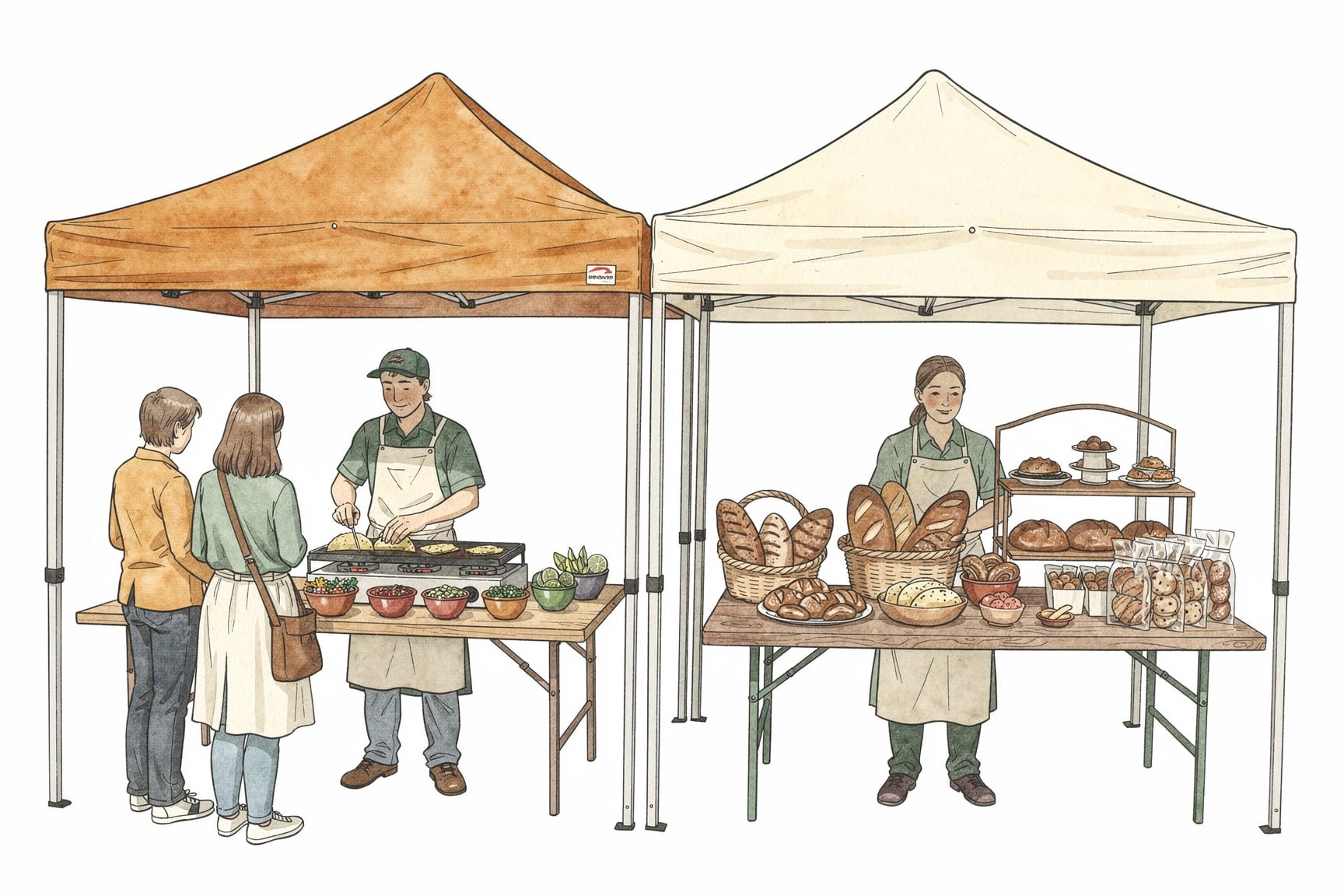
Find Food Vendor Events Accepting Vendors
Food vending is its own operational category.
You're not just applying to an event — you're navigating health department permits, cottage food laws, temporary food service licenses, and, at some events, sales tax collection on top. The paperwork stack is real. The upside is that a well-run food event can produce revenue no craft market can match.
Canopy Season helps food vendors find events that match their permits and product category.
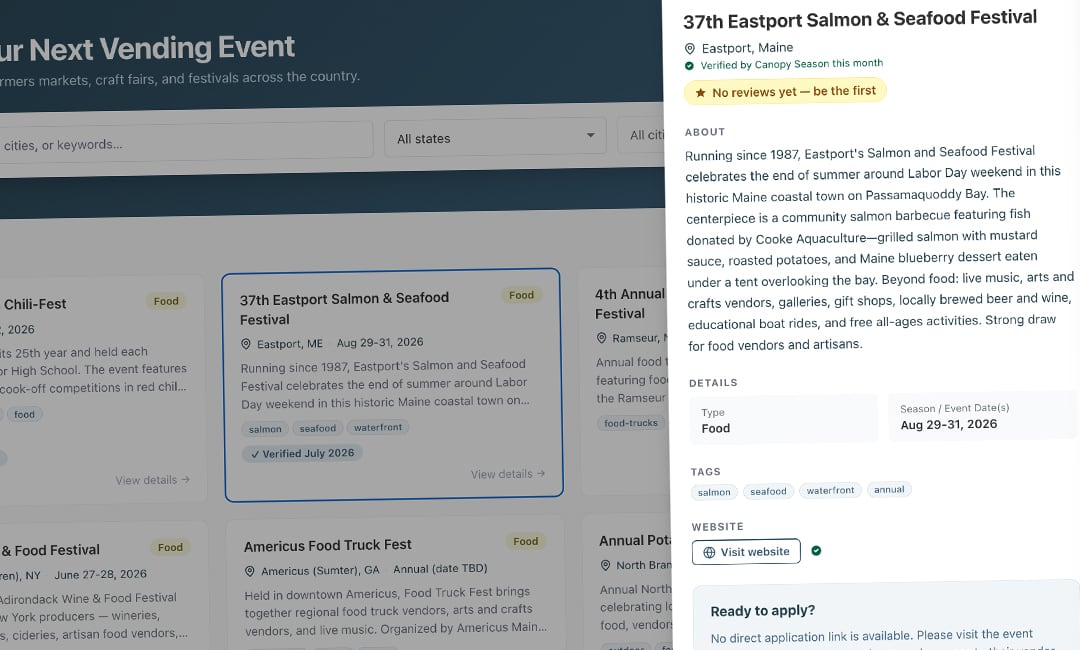
How to Find Food Vendor Events
Food vendor events include street festivals, night markets, fairgrounds events, and food-specific festivals. Each has different permit requirements. Some events handle permits centrally; most require vendors to hold their own.
Canopy Season lists food vendor events alongside the operational details that matter for planning.
What Vendors Should Look At Before Applying
The goal is not finding more events. The goal is finding events worth your time, effort, and budget.
Food vending is high-revenue and high-overhead. Choose events that match both.
Why Vendors Use Canopy Season
Canopy Season lists food vendor events alongside the permit and setup details that determine whether you can actually work them.
Questions & Answers
How do I find food vendor events accepting applications?
Canopy Season lists food vendor events alongside permit requirements and setup details. Filter by state to find events that match your permits and product category.
What permits do food vendors need?
Usually a state or county health department permit and a temporary food service license for the event. Some events handle centralized permitting; most require you to hold your own. Requirements vary by state — check with your state Department of Health.
Do food vendor events provide electricity?
Some do, some don't. Electricity is often an add-on cost when it's available. Many food vendors bring generators, which have their own noise and placement rules. Check the vendor packet before you plan your setup.
Can I sell cottage food at an event?
Depends on your state and the event. Cottage food laws allow home-produced low-risk items (baked goods, jams) at some events but not others. Farmers markets are more cottage-food-friendly than street festivals. Read your state's cottage food law carefully.
What's a typical food vendor booth fee?
Most food vendor booth fees fall between $150 and $410 per day, with a median around $250. Small local events can start under $50; larger festivals with high foot traffic can charge $1500+. Fees often reflect the higher revenue potential of food vending compared to craft categories.
Why use Canopy Season instead of other event directories?
Unlike many event listing websites that rely on outdated submissions or automated data collection, Canopy Season focuses on human-verified event information. The goal is simple: save vendors time, reduce surprises, and help them confidently choose events worth their investment. With searchable listings, verified details, application information, and vendor-focused tools, Canopy Season is designed specifically for people who make their living selling at events.