
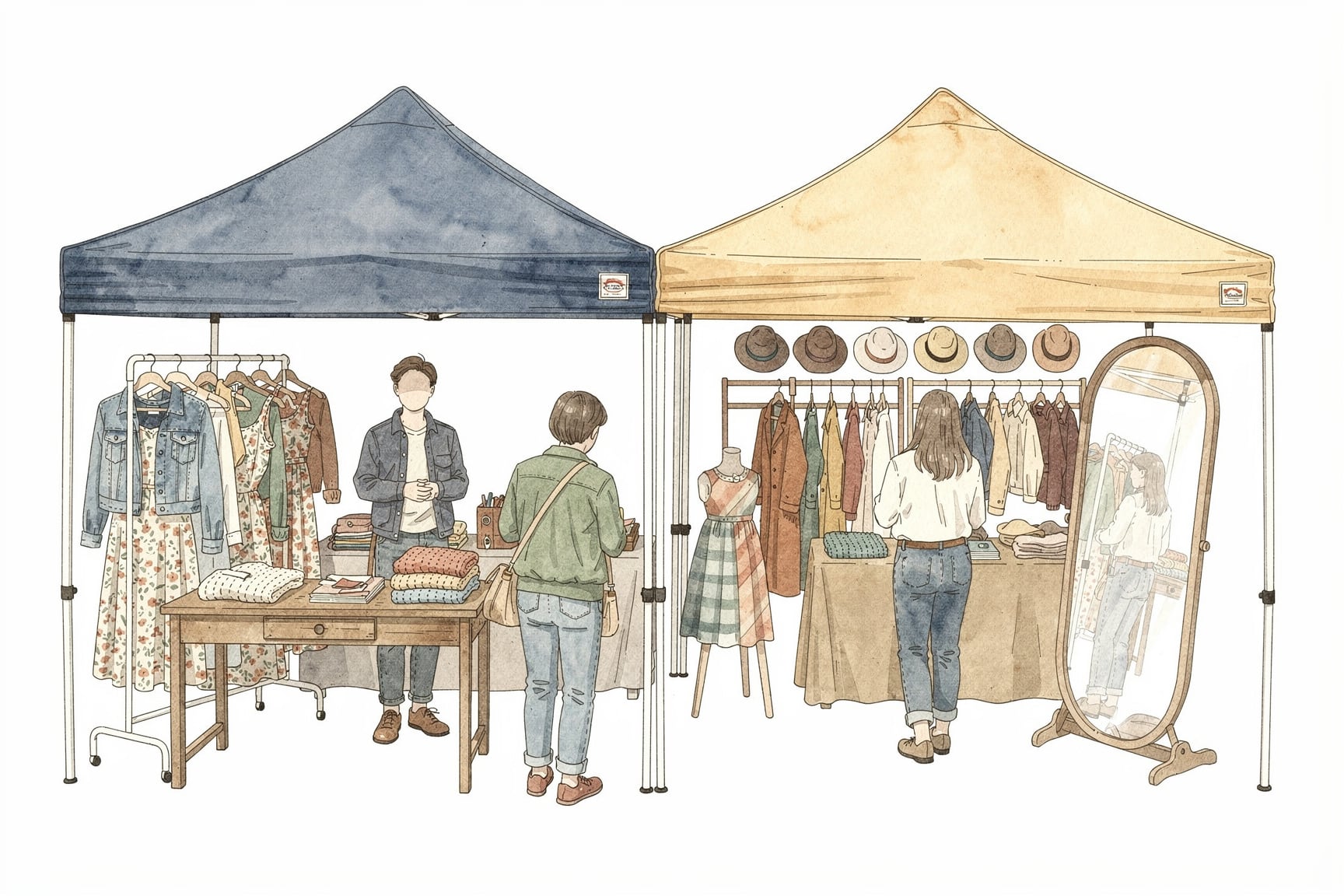
Find Vintage Markets Accepting Vendors
Vintage markets have rules, and the rules matter.
Most define vintage as 20 years or older. Some go to 25 or 30. Reproductions are usually a hard no. Clothing is very popular. Curation is often heavy, and the shoppers who show up know what they're looking for. That specificity is what makes vintage markets work — for shoppers and for the vendors who fit.
Canopy Season helps you find vintage markets that match the era and category you sell.
Vintage market listings
The Great Junk Hunt - Puyallup
VintageTouring curated vintage and antique market. Vendors are expected to merchandise their space like a boutique storefront and must build a back wall from doors, fabric or wood; pop-up tent frames are not permitted and spaces are not draped.
The Great Junk Hunt - Ventura
VintageTouring curated vintage and antique market. Vendors are expected to merchandise their space like a boutique storefront and must build a back wall from doors, fabric or wood; pop-up tent frames are not permitted and spaces are not draped.
The Great Junk Hunt - Pleasanton
VintageTouring curated vintage and antique market. Vendors are expected to merchandise their space like a boutique storefront and must build a back wall from doors, fabric or wood; pop-up tent frames are not permitted and spaces are not draped.
The Great Junk Hunt - Costa Mesa
VintageTouring curated vintage and antique market. Vendors are expected to merchandise their space like a boutique storefront and must build a back wall from doors, fabric or wood; pop-up tent frames are not permitted and spaces are not draped.
The Great Junk Hunt - Milwaukee
VintageTouring curated vintage and antique market. Vendors are expected to merchandise their space like a boutique storefront and must build a back wall from doors, fabric or wood; pop-up tent frames are not permitted and spaces are not draped.
The Great Junk Hunt - Monroe
VintageTouring curated vintage and antique market. Vendors are expected to merchandise their space like a boutique storefront and must build a back wall from doors, fabric or wood; pop-up tent frames are not permitted and spaces are not draped.
The Great Junk Hunt - Philadelphia
VintageTouring curated vintage and antique market. Vendors are expected to merchandise their space like a boutique storefront and must build a back wall from doors, fabric or wood; pop-up tent frames are not permitted and spaces are not draped.
The Great Junk Hunt - Salem
VintageTouring curated vintage and antique market. Vendors are expected to merchandise their space like a boutique storefront and must build a back wall from doors, fabric or wood; pop-up tent frames are not permitted and spaces are not draped.
The Great Junk Hunt - San Antonio
VintageTouring curated vintage and antique market. Vendors are expected to merchandise their space like a boutique storefront and must build a back wall from doors, fabric or wood; pop-up tent frames are not permitted and spaces are not draped.
Vintage Market Days of North Alabama
VintageVintage Market Days of North Alabama is a curated indoor market built around vintage, antique, and handmade goods, running 60+ dealers plus food trucks. The field covers original art, antiques, clothing, jewelry, handmade items, home décor, outdoor furnishings, and seasonal plantings. Booth presentation is part of the model — vendors are expected to build a styled display rather than set out tables, so the standard runs higher than a general craft fair or flea market.
Junkin' Market Days Fargo (Spring)
VintageJunkin' Market Days is a female-owned, curated market for small businesses across the Midwest — hosting weekend events in Kansas, North Dakota, South Dakota, and Wisconsin. Expect boutique clothes, jewelry, shabby chic home decor, rustic furniture, vintage, antiques, candles, gourmet foods, and more. Markets draw shoppers who are serious about shopping.
Junkin' Market Days Fargo (Fall)
VintageJunkin' Market Days is a female-owned, curated market for small businesses across the Midwest — hosting weekend events in Kansas, North Dakota, South Dakota, and Wisconsin. Expect boutique clothes, jewelry, shabby chic home decor, rustic furniture, vintage, antiques, candles, gourmet foods, and more. Markets draw shoppers who are serious about shopping.
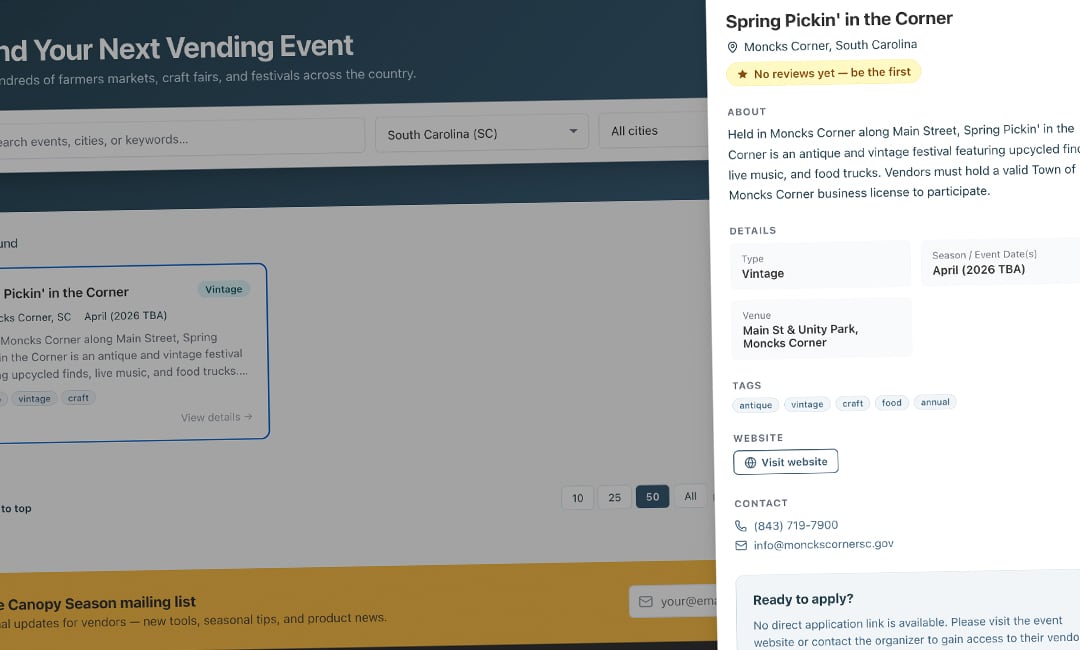
How to Find Vintage Markets
Vintage markets range from small monthly gatherings to destination events that draw dealers from multiple states. Some focus on mid-century, some on Victorian, some on general antique-adjacent decor.
Canopy Season pulls together the details so you can find markets that align with what you carry.
What Vendors Should Consider Before Applying
The goal is not finding more events. The goal is finding events worth your time, effort, and budget.
Vintage markets reward dealers who know their material. Applying to the wrong era is a common way to burn a jury fee.
Why Vendors Use Canopy Season
Canopy Season helps you find vintage markets by region and category so your inventory ends up in front of the right shoppers.
Questions & Answers
How do I find vintage markets accepting dealers?
Search Canopy Season by state, region, or specialty. Most vintage markets list their age requirements and category focus on the vendor page so you can see whether your inventory fits before applying.
What qualifies as vintage vs. antique?
Vintage is generally 20–99 years old. Antique is 100 years or older. Some markets set stricter thresholds (25+ or 30+ years for vintage). Check each market's rules — the definition isn't universal.
Do vintage markets allow reproductions?
Most don't. Reproductions and reproduction-adjacent items are usually a hard no at curated vintage markets. A few allow "vintage-inspired" or handmade items in a separate category. Read the vendor policy carefully.
What's a typical vintage market booth fee?
Single-day vintage markets typically run $75–$250. Destination vintage events (multi-day, established brand) can run $300–$800. Booth fees usually track expected shopper spend.
Are vintage markets juried?
Many are, especially the more curated ones. Juries review inventory photos, dealer reputation, and category fit. Non-juried vintage markets exist but tend to be less selective — which affects who shows up to shop.
Why use Canopy Season instead of other event directories?
Unlike many event listing websites that rely on outdated submissions or automated data collection, Canopy Season focuses on human-verified event information. The goal is simple: save vendors time, reduce surprises, and help them confidently choose events worth their investment. With searchable listings, verified details, application information, and vendor-focused tools, Canopy Season is designed specifically for people who make their living selling at events.